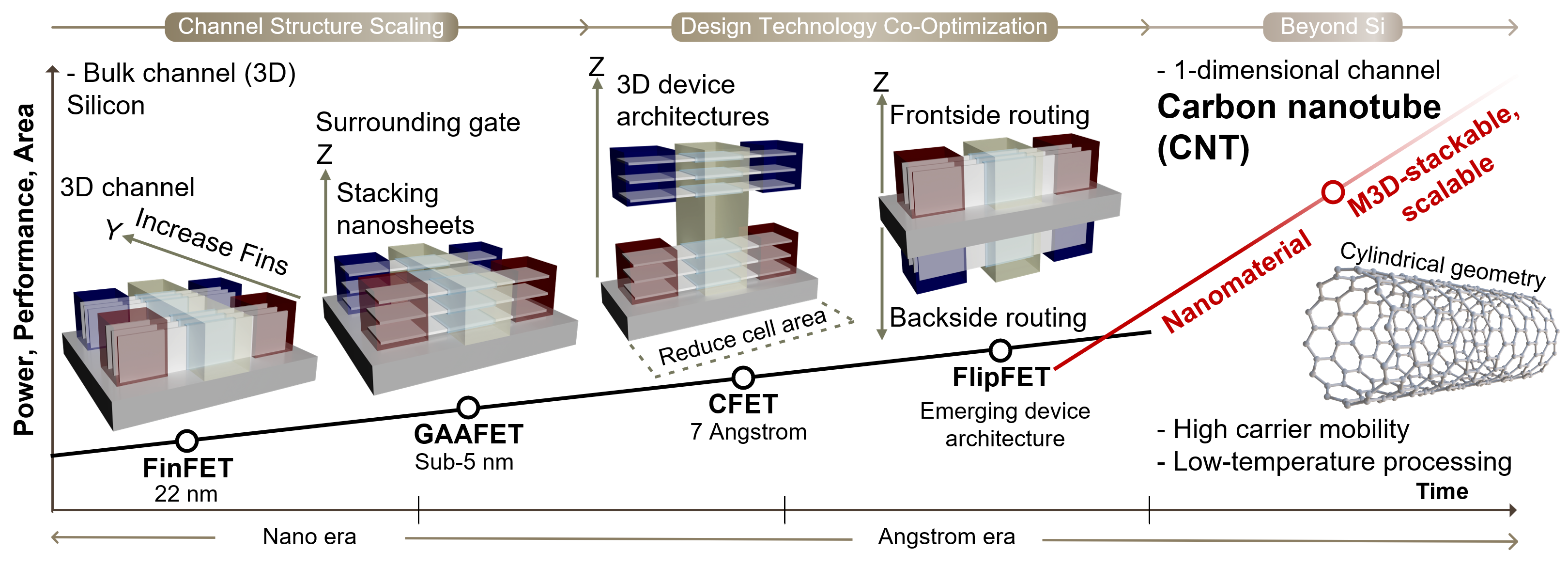
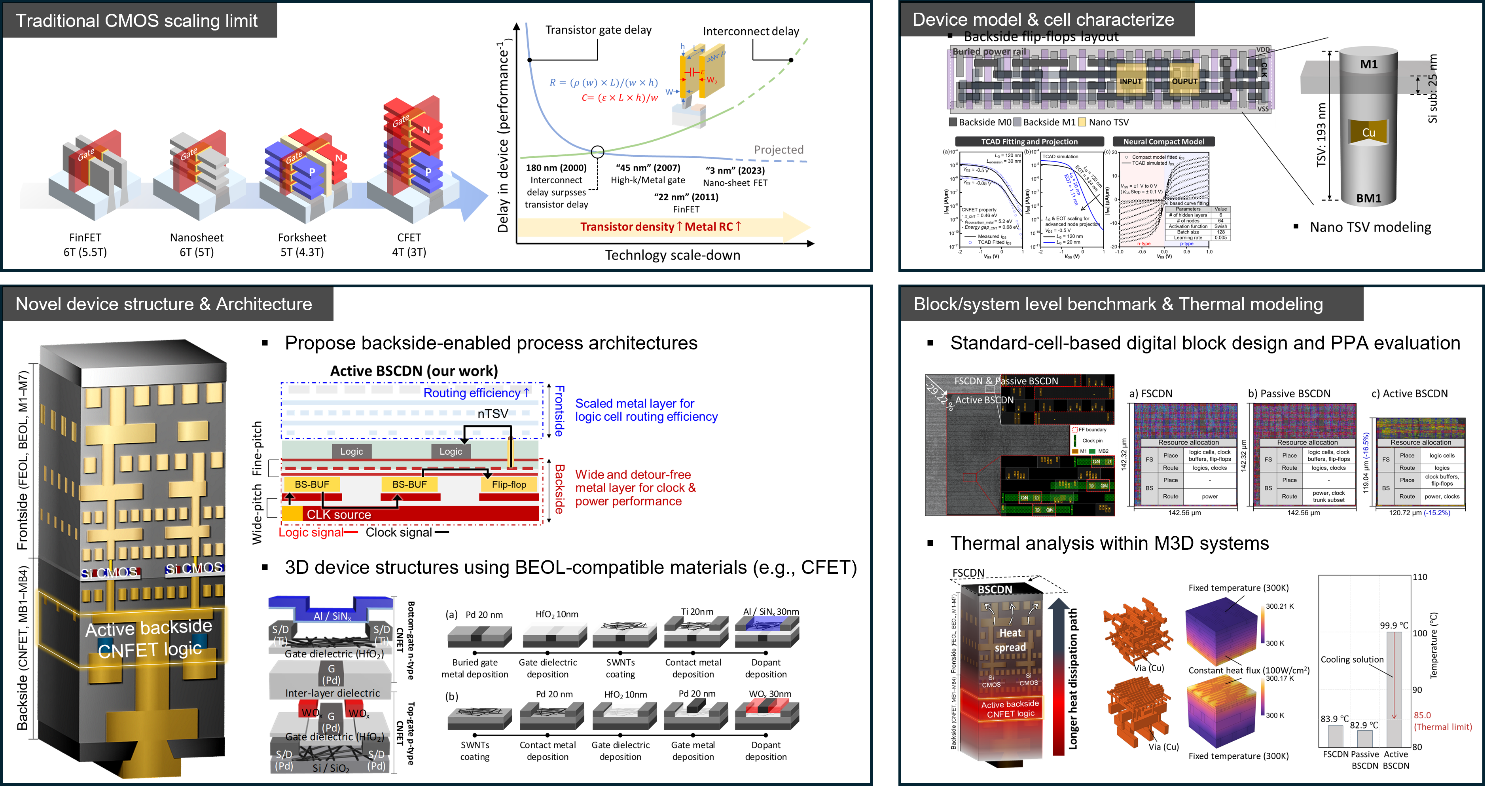
As silicon field-effect transistors approach their fundamental downscaling limits, maintaining performance gains through conventional scaling has become increasingly challenging. To address these limitations, advanced device architectures—such as gate-all-around (GAA) FETs, complementary FETs (CFETs), and FlipFETs—along with emerging low-dimensional channel materials, are being actively explored for next-generation logic. Low-dimensional materials, including two-dimensional transition metal dichalcogenides (TMDs) and one-dimensional carbon nanotubes (CNTs), are particularly attractive due to their excellent electrical properties at scaled dimensions and their compatibility with low-temperature, BEOL-compatible processes. These characteristics make them promising candidates for monolithic 3D integration. enabling sequential device stacking and vertical integration.
Two-dimensional transition metal dichalcogenides (TMDs)
Single-crystalline 2D channel
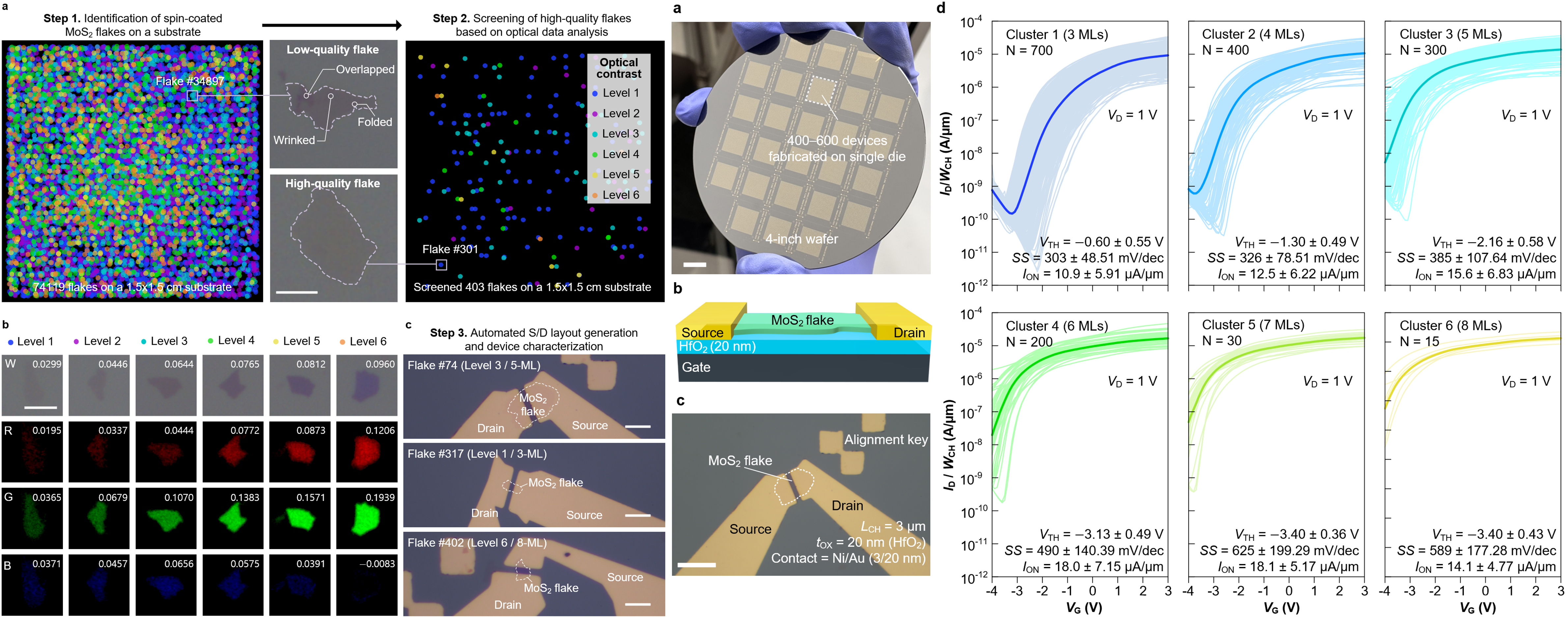
This work aims to establish a comprehensive framework for employing two-dimensional (2D) semiconductors as channel materials in transistor devices. We first investigate 2D single-flake transistors, focusing on how flake thickness and material uniformity influence electrical characteristics through systematic and statistical analyses. Building on the insights obtained from single-flake devices, we further extend our study to device fabrication using transferred 2D film-based transistor performance. Through this continuous research flow, we seek to bridge fundamental material understanding and practical device implementation of 2D semiconductor channels.
High performance TMD FETs
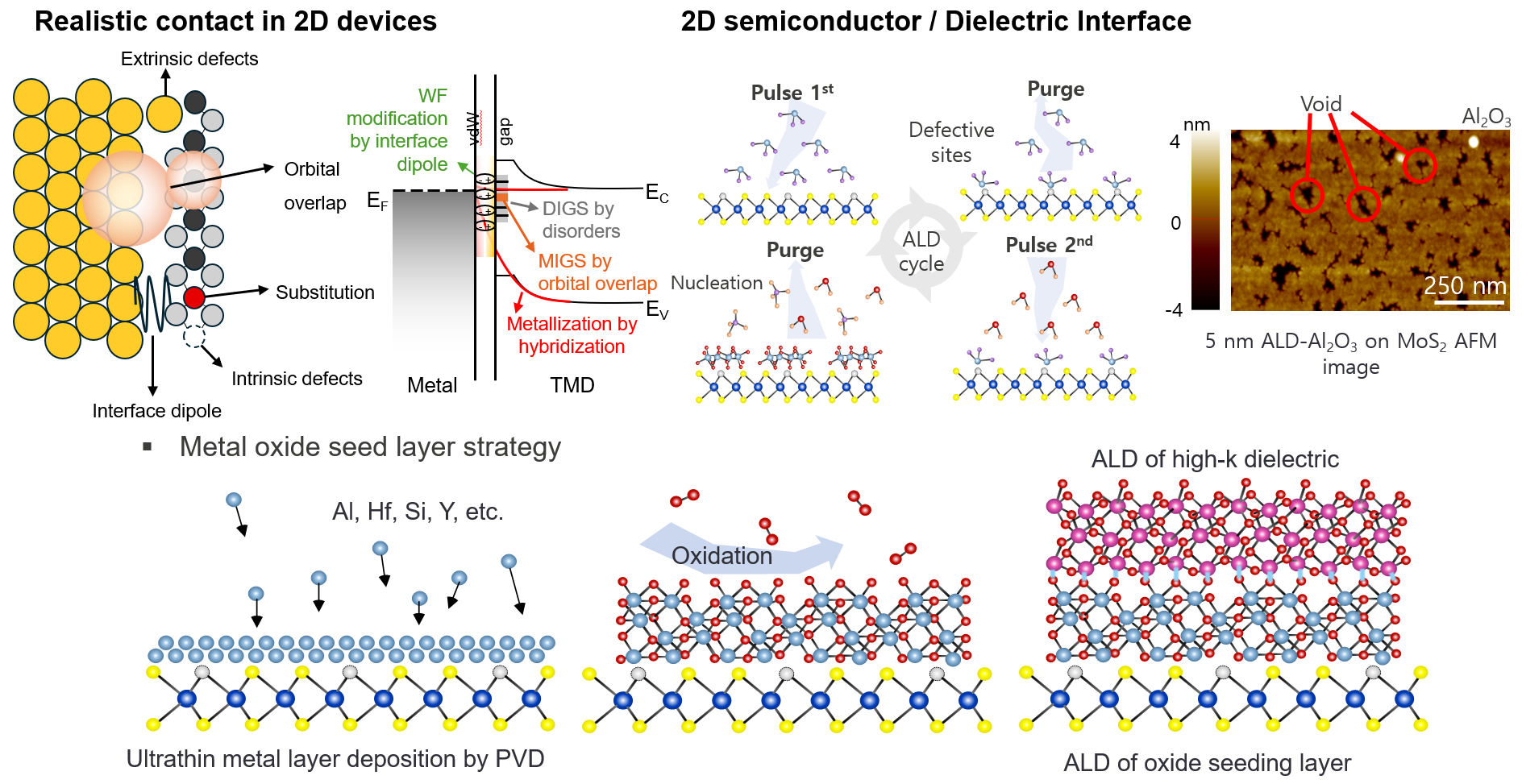
This research aims to enhance performance and reliability to enable the commercialization of two-dimensional (2D) semiconductors as transistor channel materials. Focusing on logic-compatible, top-gated 2D FETs, we address key challenges arising from the ultrathin of 2D materials, including high contact resistance and difficulties in forming a uniform, high-quality gate stack. To overcome these issues, we perform contact engineering and seed-layer/interfacial engineering to achieve conformal dielectric deposition, and we quantitatively investigate electrical characteristic variations and reliability metrics at the single-flake level. Building on insights from single-flake devices, we further expand the scope to wafer-scale, large-area device fabrication by adopting 2D film processing, thereby validating the feasibility of 2D channels in realistic integration environments and advancing toward nanoscale device fabrication and scaling.
One-dimensional carbon nanotubes (CNTs)
High density aligned CNT channel
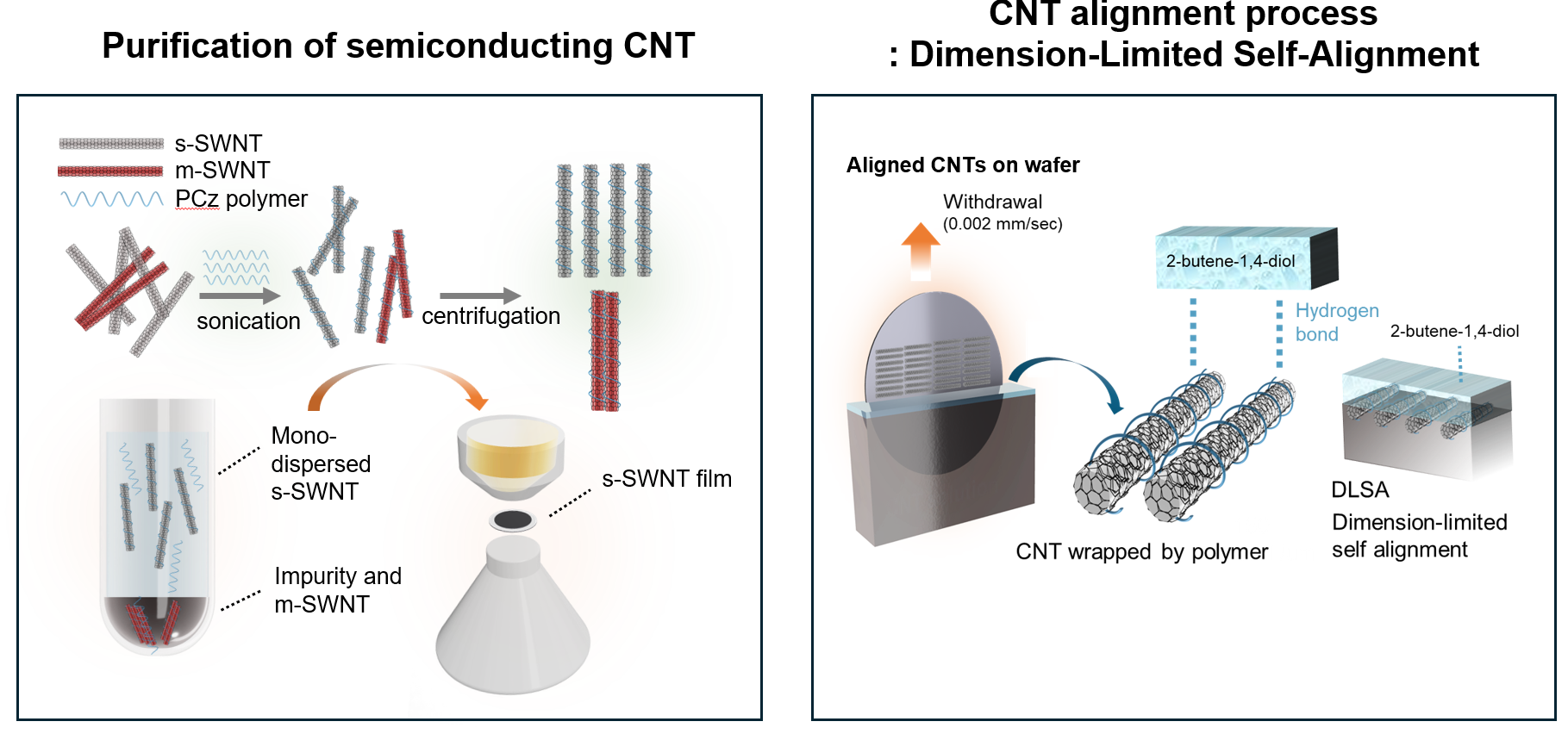
To utilize Carbon Nanotubes (CNTs) as a channel material, this research aims to purify high-purity semiconducting CNTs and fabricate high-density, uniformly aligned CNT films.First, 1) wrapping polymers will be employed in a solution-based process to separate metallic and semiconducting CNTs. By analyzing this mechanism, we aim to achieve a semiconducting CNT purity of over 99.9999%. To coat these purified CNTs onto a substrate in an aligned manner, 2) the Dimension-limited Self-Alignment (DLSA) method will be used. Through fluid dynamics and material analysis, we intend to enhance alignment precision and minimize CNT stacking. Furthermore, a novel alignment process will be developed to obtain highly ordered CNT films with consistent inter-tube spacing. Finally, by utilizing these aligned CNT films, we will 3) fabricate aligned CNFETs and implement them into next-generation device architectures, such as CFETs and GAA FETs.
High performance CNT-FETs
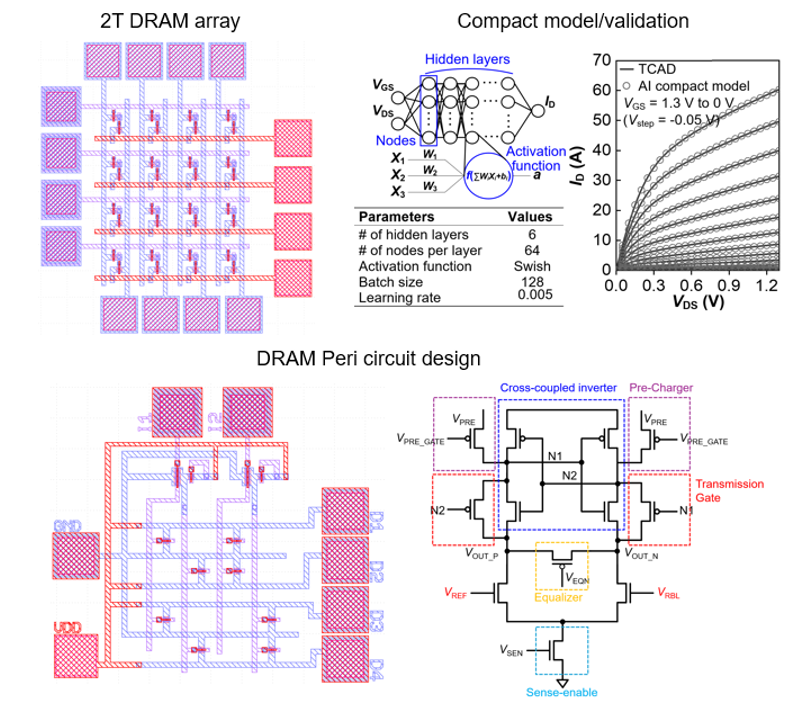
CNTs offer exceptional carrier mobility, high carrier density, and quasi-one-dimensional transport, enabling strong electrostatic control and high drive current. However, the small bandgap of CNTs leads to increased off-state leakage in MOSFET-like CNFETs, primarily due to band-to-band tunneling in gate-underlap and source/drain extension regions. Our research focuses on a structural solution that enables effective bottom-side doping of CNT channels while maintaining full compatibility with GAA architecture and BEOL-compatible integration schemes. Building on this device concept, we further explore vertically stacked CNFET-based CFET architectures and DTCO-driven standard cell optimization. Through block- and chip-level PPA benchmarking, our goal is to identify and extend the performance limits of low-dimensional-material-based logic technologies for future monolithic 3D systems.